ADUSA Video Ads
Client
Role
Ahold Delhaize USA
Sr. Manager, Experience Design
As part of an ADUSA organizational goal to increase Retail Media revenue to $8B by 2028, the Ahold Delhaize USA Retail Media team was looking for opportunities to expand their product offerings for sponsored content across the onsite experience. The product and design team in partnership with retail media identified an opportunity to expand the use of dynamic video content in the existing native display banners to provide brands with a highly engaging storytelling format that increases customer engagement and product discovery.
The existing native display banners only featured static imagery, which were not taking advantage of dynamic rich media and content that customers expect from their ad experience. Also, with social and onsite platforms fully embracing videos, video content had become a table stakes offering across retail media networks.
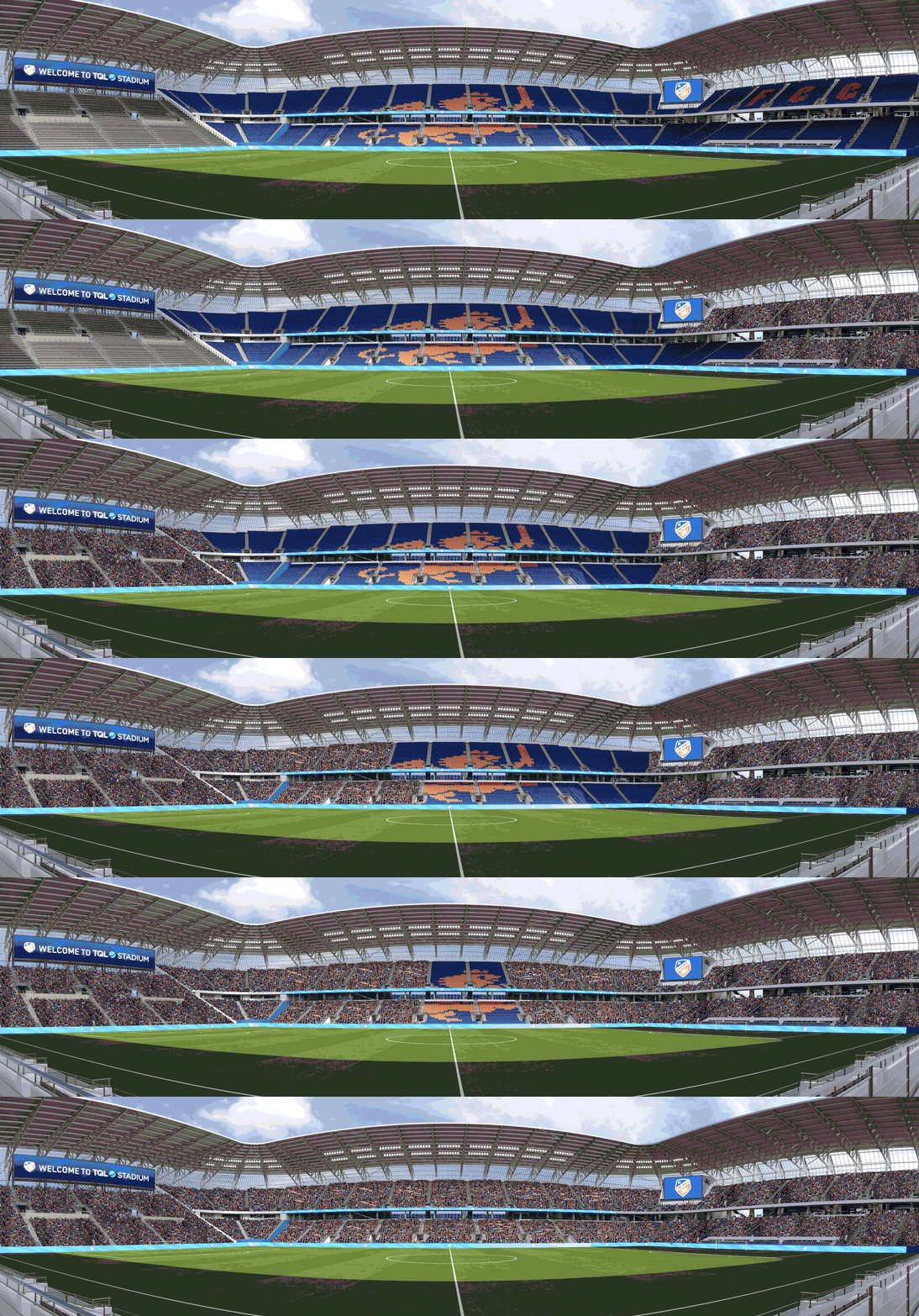
TQL Stadium 3D Rendering
Through our Diary Study, we found that customers are attracted to ads that include mixed media such as video and respond positively to visually engaging content.
CPGs have already requested dynamic content from the ADRM Sales team.
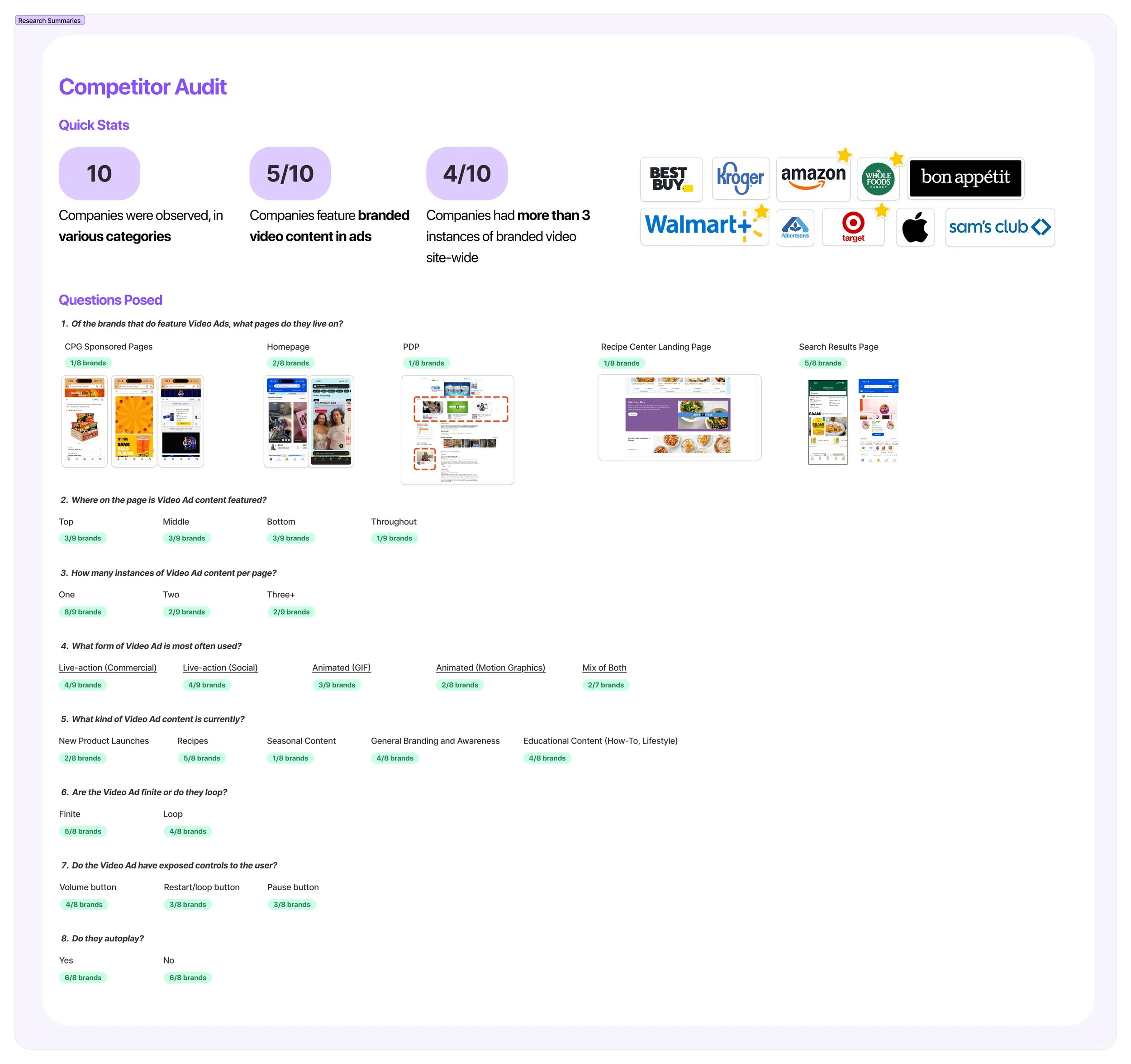
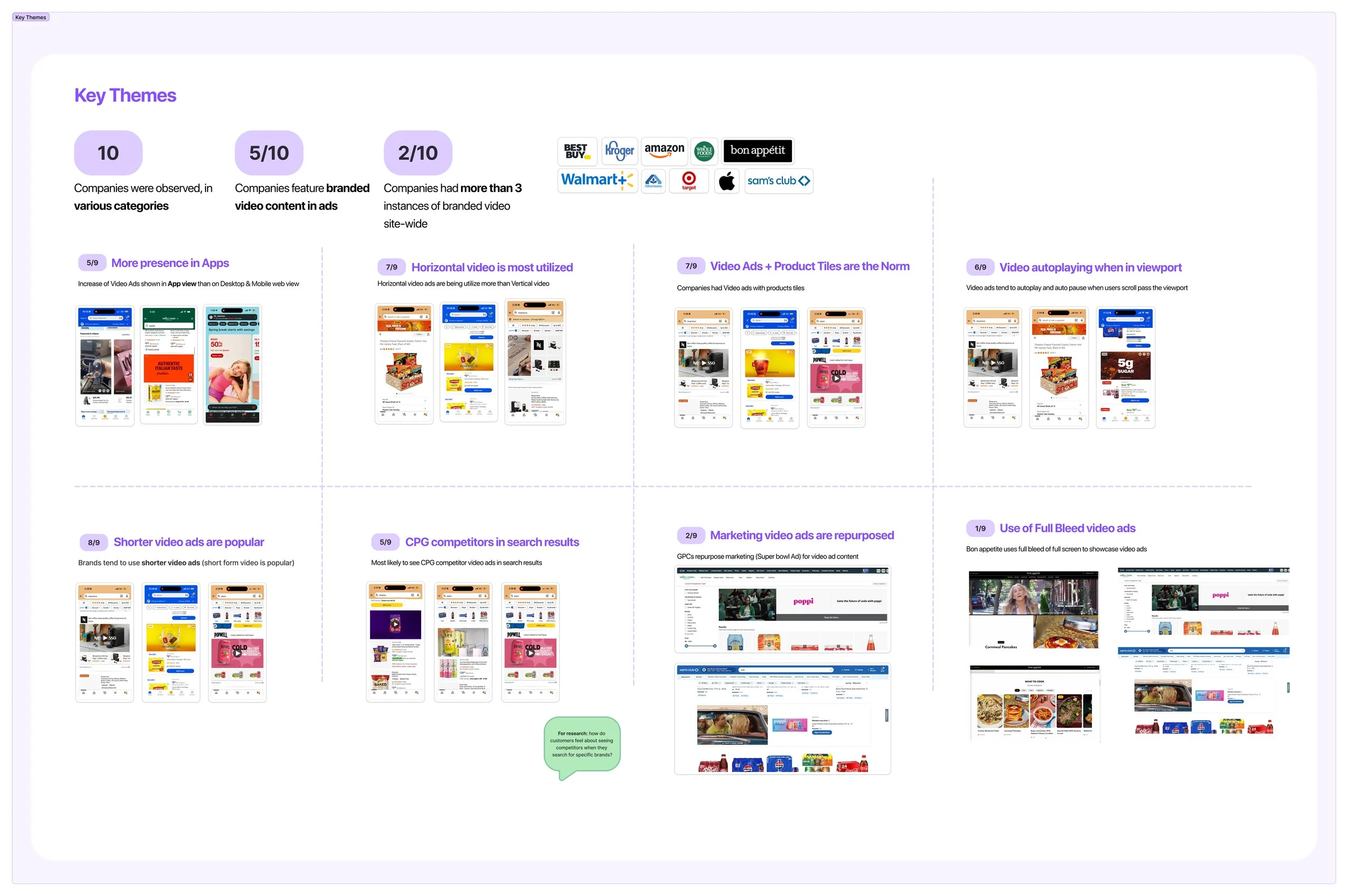
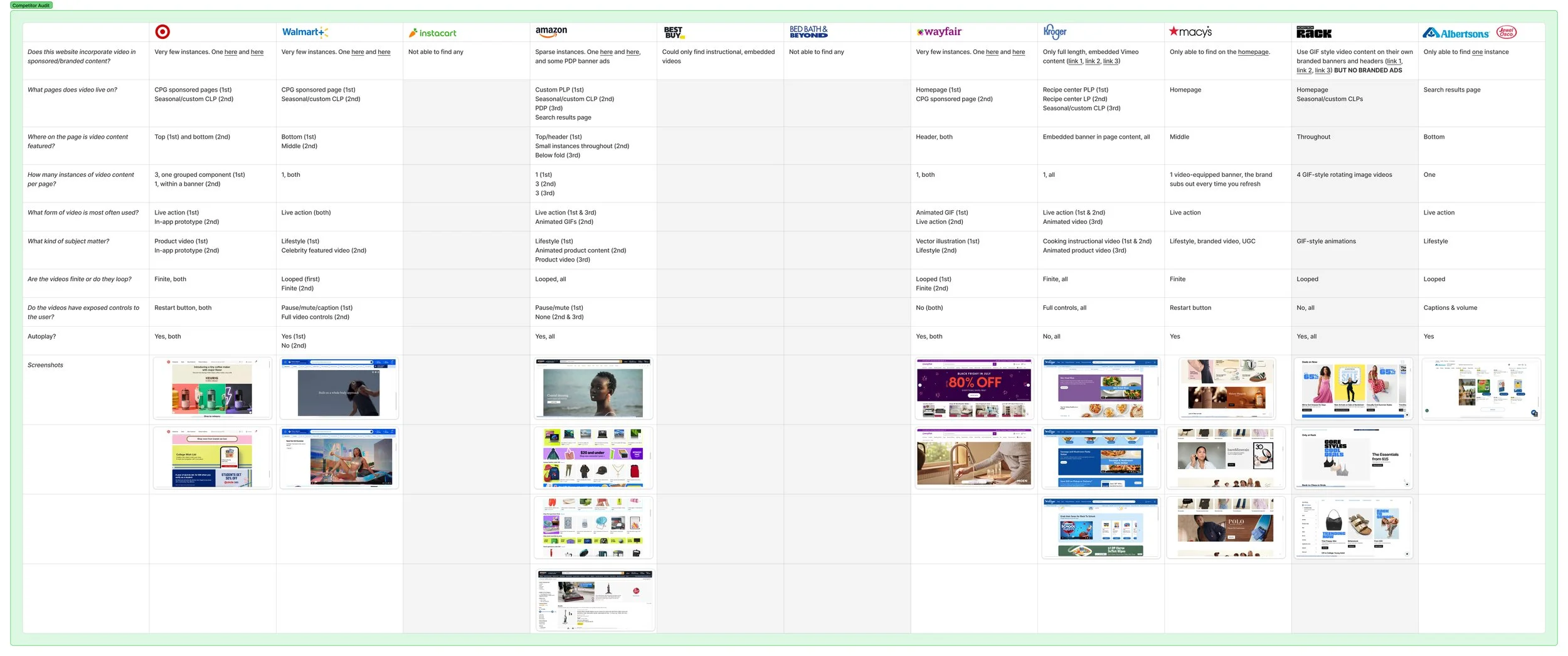
With that info, we wanted to handle our discovery with the ideas that. Since video has become a common practice with most grocery brands. The discovery process started with a competitor audit to determine a set of baseline standards that we could use to help inform our requirements.
Ads were added programmatically into the 3D model in order to allow brand managers to explore which ads in the stadium were performing best in terms of Dollar Value, Duration, Impression, and SportsBiz’s propriety “DeepScore”, a combination of metrics that give ads a performance score.
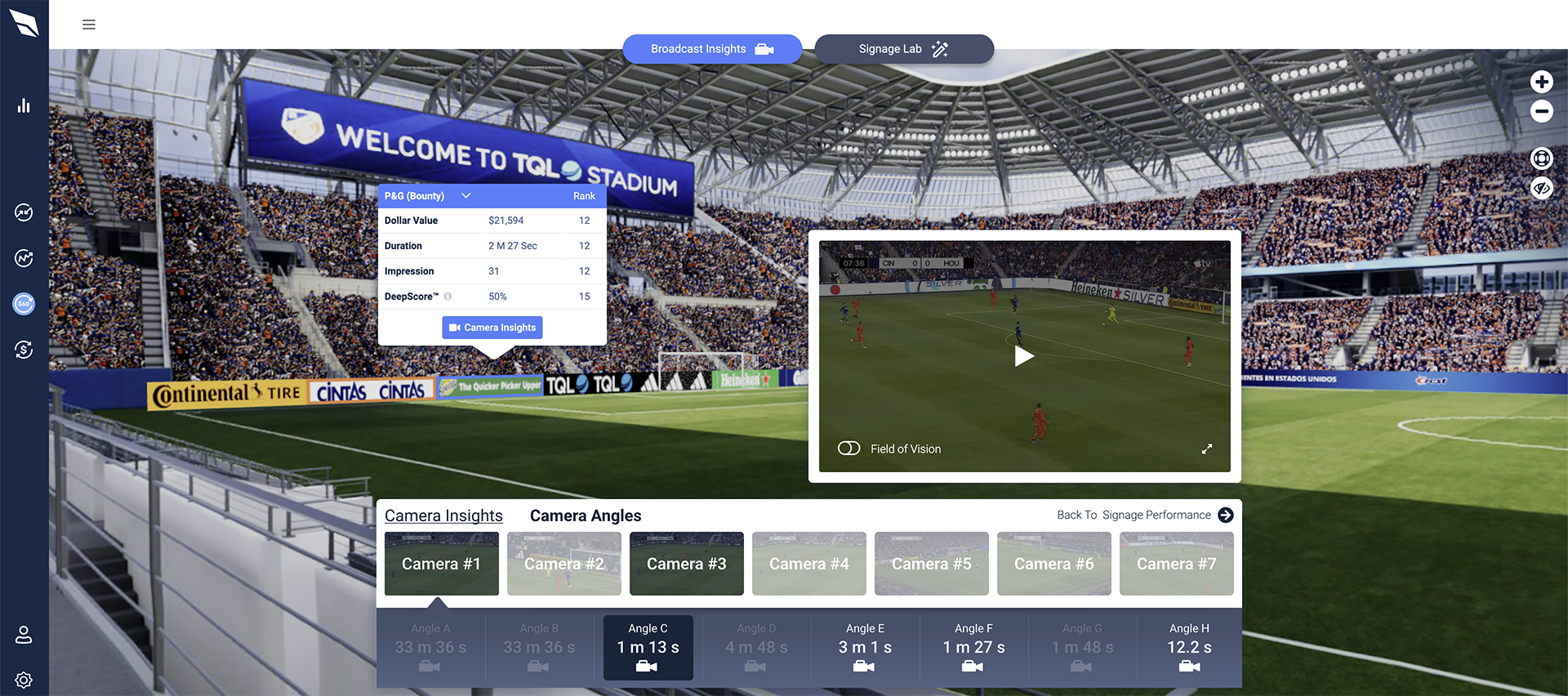
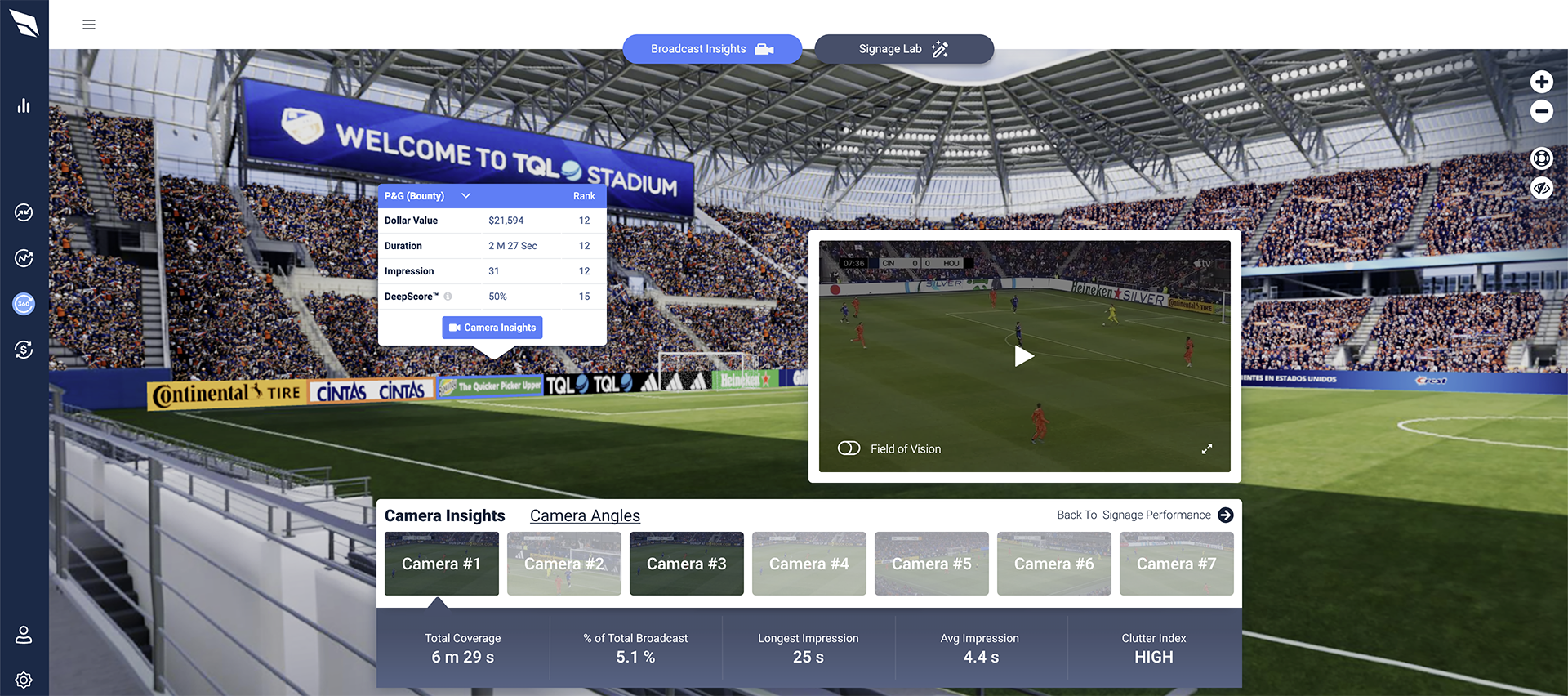
Camera Insights and Camera Angles
Clicking each ad allows for a deeper dive into detailed information, including which cameras actually picked up an ad during the broadcast, and for how long.
Clips of each camera angle allows the user to see the broadcast in real time to see what the ad looked like to fans.
As a brand manager looking to optimize their placement, the Signage Lab tool allows the user to add in creative from their own brand in order to see what it looks like in stadium, giving them a better idea of what the signage will look like in real time.
After the initial release of the Signage 360, the product has continued to evolve with quality of life improvements, including bringing in a more advanced 3D model that creates a more realistic stadium view.
With the quality of live updates, a new feature that was added was Seat Exposure, which brought in insights for the in stadium experience. In Seat Exposure heatmaps would show brand managers which seats were able to optimally view different ads depending on where fans were sitting.
As the product continues to evolve, it takes on it’s next stage, being built as a fully gamified experience in Unreal Engine, allowing for even more flexibility to create a realistic stadium experience.
Work created in partnership with:
Quentin Cotillard - CCO
Bethany Anderson - VP UI/UX
LJ Sickman - Senior Product Designer
Joe Gamalinda - Senior Product Designer
Jimi Thorin - Senior Software Engineer